Friday, December 16, 2011

Google+ Hangouts head to wall posts and Messenger (Digital Trends)

hangouts in posts

Announced on the official Google blog earlier today, the company is rolling out several upgrades to the video chat feature named Hangouts. One of the most notable changes effects mobile users and brings Hangouts into an updated version of the?Google+ Messenger application. Once the application has been updated for Android and Apple smartphones, users can simply tap the?hangout icon at the top of the Google+?Messenger?interface during a chat session and video chat automatically launches.?

hangouts from messengerGoogle is also bringing the ability to launch into a Hangout video chat call from any post. After a user posts a new piece of content within their feed, they can click the Hangout link underneath the post to bring up the Hangout chat interface. When a friend views the post on the user?s page, a comment has been automatically added with the link to the hangout. Friends can click the link to enter the Hangout room and they can initiate any Hangout from content on other user?s posts. When the Hangout room is closed by all users, the linked comment?is removed?from the feed.

Google has added the ability for friends to ?dial in? to a Hangout as well. In case the user doesn?t has a webcam or front-facing camera within a phone, they can dial a phone number to connect and hear other participants within the Hangout. Calls are free within the United States and Canada. Google has also added up to three Hangout chats that a user can join on the right side of the screen when they are available as well as notification sounds when being invited to a Hangout. One other small update includes virtual antlers as a gag when chatting with friends or family.

Google also offered an update on the?Hangouts On Air feature, a way to provide streaming video within a Google+ post. The search company is opening up the feature to more celebrities, public figures and influential Google+ users as well as adding YouTube integration to send recorded video direct to a YouTube account for video storage.?

This article was originally posted on Digital Trends

More from Digital Trends

This week in Google+ updates

Facebook?s ?awesome? product is video chat from Skype

Google projects: Social gaming platform and Chrome video chat

Google hits us with yet another YouTube redesign

Source: http://us.rd.yahoo.com/dailynews/rss/personaltech/*http%3A//news.yahoo.com/s/digitaltrends/20111215/tc_digitaltrends/googlehangoutsheadtowallpostsandmessenger

rick neuheisel festivus festivus fast times at ridgemont high fast times at ridgemont high extreme makeover home edition andrea bocelli

The Rise Of The ?Creative? Class

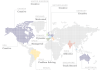
buzzwords_final_world_bigger_fontLinkedIn has put out its annual list of top buzzwords (over)used on members' professional profiles. The top word people in the U.S. use to describe themselves on LinkedIn? "Creative." That word did not even make the top ten list last year, when "Extensive Experience" topped the list. And it's not just the U.S. If you look at the country breakdown, this was the most used word in economies such as the U.S., UK, Canada, Netherlands, and Germany. (People in Spain like to think of themselves as more "Managerial;" India, "Effective;" Brazil, "Multinational;" France, "Dynamic").

Source: http://feedproxy.google.com/~r/Techcrunch/~3/bPfxqRySrmg/

senate bill 5 joe paterno press conference joe paterno scandal joe paterno scandal election day 2011 mississippi personhood

Wednesday, December 7, 2011

Dunn, ex-HP chairwoman, dies after cancer bout

FILE - In this March 30, 2005 file photo, Hewlett-Packard Company's Patricia Dunn speaks during a news conference at HP headquarters in Palo Alto, Calif. Dunn, the former Hewlett-Packard Co. chairwoman who authorized a boardroom surveillance probe that ultimately sullied her remarkable rise from investment bank typist to the corporate upper class, died Sunday, Dec. 4, 2011. She was 58. (AP Photo/Paul Sakuma, File)

FILE - In this March 30, 2005 file photo, Hewlett-Packard Company's Patricia Dunn speaks during a news conference at HP headquarters in Palo Alto, Calif. Dunn, the former Hewlett-Packard Co. chairwoman who authorized a boardroom surveillance probe that ultimately sullied her remarkable rise from investment bank typist to the corporate upper class, died Sunday, Dec. 4, 2011. She was 58. (AP Photo/Paul Sakuma, File)

FILE - In this March 30, 2005 file photo, Hewlett-Packard Co. new president and CEO Mark Hurd, center, speaks as he sits next to Patricia Dunn, left, HP's non-executive chairwoman, during a news conference at HP headquarters in Palo Alto, Calif. Dunn, the former Hewlett-Packard Co. chairwoman who authorized a boardroom surveillance probe that ultimately sullied her remarkable rise from investment bank typist to the corporate upper class, died Sunday, Dec. 4, 2011. She was 58. (AP Photo/Paul Sakuma, File)

(AP) ? Patricia Dunn, the former Hewlett-Packard Co. chairwoman who authorized a boardroom surveillance probe that ultimately sullied her remarkable rise from investment bank typist to the corporate upper class, has died after a long bout with cancer. She was 58.

Dunn died Sunday morning at her home in Orinda surrounded by her family, according to her sister, Debbie Lammers. She said Dunn's ovarian cancer had returned.

Once one of the most powerful women in corporate America, Dunn saw her career tarnished in 2006 when she was ousted from HP and brought up on criminal charges ? which were ultimately dropped ? for approving the company's plan to snoop into the private phone records of board members, journalists and HP employees to catch people leaking to the media.

The scandal unfolded as Dunn continued to battle a disease that had haunted her through a sparkling investment banking career and a stormy nine-year stretch on the board of HP, one of the world's largest technology companies.

Dunn had spent time on philanthropic matters in the years since the scandal, Lammers said. Dunn and her husband, Bill Jahnke, endowed a faculty position at the University of California, San Francisco's Department of Surgery named in honor of her mother, who also died of cancer.

Lammers said she wanted people to remember her sister's "incredibly influential rise in her professional life and her courage and valiant battles over the course of her treatments."

"Her example of leadership, courage and poise throughout her professional and personal life was exemplary," Lammers told The Associated Press on Monday.

Dunn's time at HP coincided with some of the most contentious and challenging periods since the Palo Alto-based company was founded in 1939.

Dunn joined HP's board in 1998 and was instrumental in the hiring and firing of CEO Carly Fiorina, whose flamboyant personality and ferocity in securing the $19 billion purchase of Compaq Computer Corp. ultimately helped hasten her ouster amid a sagging stock price and disappointing results from the combined company.

Dunn was the one who announced Fiorina's ouster in February 2005 and named her low-key successor, Mark Hurd, previously CEO of NCR Corp. Hurd himself was ousted last year after an investigation into a sexual harassment claim found inconsistencies in expense reports filed.

Dunn also assumed Fiorina's role as chairwoman at the time. Dunn was forced out in that role in September 2006 in an embarrassing scandal involving spying on the telephone records of board members and journalists to ferret out the source of leaks to the media.

Just a month later, California's attorney general charged Dunn and four others with four felony counts each ? conspiracy, fraud, identity theft and illegally using computer data ? for their roles in the probe. That came just two days before she started chemotherapy treatments for advanced ovarian cancer.

The criminal charges against Dunn were eventually dropped, as prosecutors said she had little involvement in the actual "pretexting" ? the ruse used by investigators to view private telephone records by pretending to be someone else ? and because of her ailing health. Charges against the other defendants were also dropped, with a Santa Clara County Superior Court judge calling their conduct "a betrayal of trust and honor" at worst that was not criminal behavior at the time it occurred.

Once an aspiring investigative reporter, Dunn, a graduate of the University of California, Berkeley, found more immediate and lucrative work in the financial world and made her mark in investment banking.

After working briefly as a part-time reporter for a community newspaper in San Francisco, Dunn began her corporate climb by capitalizing on a temporary typist gig that she landed at an investment firm in the 1970s.

She was able to turn the two-week typing assignment into full-time work and managed to quickly rise through the ranks by earning a reputation as a hard-edged businesswoman. That reputation eventually helped her earn the promotion to CEO of fund management behemoth Barclays Global Investors in 1995.

Dunn's life had been far from charmed.

Financial difficulties dogged her family throughout her childhood, and her father, a vaudeville actor, died of a heart attack before she was a teen. After the death, the family moved to Marin County, north of San Francisco, and her mother's emotional health deteriorated.

Dunn's mother later died of breast cancer.

It was at the height of Dunn's corporate success when she was diagnosed with cancer herself, forcing her to step down in 2002 from her role as Barclays CEO to fight breast cancer and melanoma.

Two years later, she was diagnosed with ovarian cancer, and in fall 2006, she underwent surgery for a metastasized tumor ? three weeks before the public learned of the HP investigation that spawned congressional investigations, criminal probes and forced Dunn's resignation.

As Dunn and others involved in the probe grappled with the fallout, the public was given a rare view of the workings of a board consumed with bitter rivalries and dysfunction.

The probe Dunn authorized ultimately identified renowned physicist and former presidential adviser George Keyworth as the director who spoke anonymously to a technology news website about a confidential board retreat. Some viewed the article as innocuous, and venture capitalist Tom Perkins resigned from the board in protest over the investigators' tactics and took his case to investigators to force HP to disclose the reason for his departure.

The family is planning a memorial service in San Francisco.

Dunn is survived by her husband, Jahnke; three adult children, Janai Brengman, Michelle Cox and Michael Jahnke; ten grandchildren; a brother, Paul Dunn, and a sister, Lammers.

Associated Press

Source: http://hosted2.ap.org/APDEFAULT/f70471f764144b2fab526d39972d37b3/Article_2011-12-05-Obit-Dunn/id-ead354f7eda2427999559e9e293c2808

corso james arthur ray james arthur ray elisabeth shue avastin avastin robert wagner

Tuesday, December 6, 2011

Chemists become molecular sculptors, synthesizing tiny, molecular traps

ScienceDaily (Dec. 5, 2011) ? Using clever but elegant design, University at Buffalo chemists have synthesized tiny, molecular cages that can be used to capture and purify nanomaterials.

Sculpted from a special kind of molecule called a "bottle-brush molecule," the traps consist of tiny, organic tubes whose interior walls carry a negative charge. This feature enables the tubes to selectively encapsulate only positively charged particles.

In addition, because UB scientists construct the tubes from scratch, they can create traps of different sizes that snare molecular prey of different sizes. The level of fine tuning possible is remarkable: In the Journal of the American Chemical Society, the researchers report that they were able to craft nanotubes that captured particles 2.8 nanometers in diameter, while leaving particles just 1.5 nanometers larger untouched.

These kinds of cages could be used, in the future, to expedite tedious tasks, such as segregating large quantum dots from small quantum dots, or separating proteins by size and charge.

"The shapes and sizes of molecules and nanomaterials dictate their utility for desired applications. Our molecular cages will allow one to separate particles and molecules with pre-determined dimensions, thus creating uniform building blocks for the fabrication of advanced materials," said Javid Rzayev, the UB assistant professor of chemistry who led the research.

"Just like a contractor wants tile squares or bricks to be the same size so they fit well together, scientists are eager to produce nanometer-size particles with the same dimensions, which can go a long way toward creating uniform and well-behaved materials," Rzayev said.

To create the traps, Rzayev and his team first constructed a special kind of molecule called a bottle-brush molecule. These resemble a round hair brush, with molecular "bristles" protruding all the way around a molecular backbone.

After stitching the bristles together, the researchers hollowed out the center of each bottle-brush molecule, leaving behind a structure shaped like a toilet paper tube.

The carving process employed simple but clever chemistry: When building their bottlebrush molecules, the scientists constructed the heart of each molecule using molecular structures that disintegrate upon coming into contact with water. Around this core, the scientists then attached a layer of negatively charged carboxylic acid groups.

To sculpt the molecule, the scientists then immersed it water, in effect hollowing the core. The resulting structure was the trap -- a nanotube whose inner walls were negatively charged due to the presence of the newly exposed carboxylic acid groups.

To test the tubes' effectiveness as traps, Rzayev and colleagues designed a series of experiments involving a two-layered chemical cocktail.

The cocktail's bottom layer consisted of a chloroform solution containing the nanotubes, while the top layer consisted of a water-based solution containing positively charged dyes. (As in a tequila sunrise, the thinner, water-based solution floats on top of the denser chloroform solution, with little mixing.)

When the scientists shook the cocktail for five minutes, the nanotubes collided with and trapped the dyes, bringing the dyes into the chloroform solution. (The dyes, on their own, do not dissolve in chloroform.)

In similar experiments, Rzayev and his team were able to use the nanotubes to extract positively charged molecules called dendrimers from an aqueous solution. The nanotubes were crafted so that dendrimers with a diameter of 2.8 nanometers were trapped, while dendrimers that were 4.3 nanometers across were left in solution.

To remove the captured dendrimers from the nanotubes, the researchers simply lowered the pH of the chloroform solution, which shuts down the negative charge inside the traps and allows the captured particles to be released from their cages.

The research on nanotubes is part of a larger suite of studies Rzayev is conducting on bottle-brush molecules using a National Science Foundation CAREER award. His other work includes the fabrication of bottle-brush-based nanomembranes that could be adapted for water filtration, and the assembly of layered, bottle-brush polymers that reflect visible light like the wings of a butterfly do.

Recommend this story on Facebook, Twitter,
and Google +1:

Other bookmarking and sharing tools:


Story Source:

The above story is reprinted from materials provided by University at Buffalo.

Note: Materials may be edited for content and length. For further information, please contact the source cited above.


Journal Reference:

  1. Kun Huang, Javid Rzayev. Charge and Size Selective Molecular Transport by Amphiphilic Organic Nanotubes. Journal of the American Chemical Society, 2011; 133 (42): 16726 DOI: 10.1021/ja204296v

Note: If no author is given, the source is cited instead.

Disclaimer: Views expressed in this article do not necessarily reflect those of ScienceDaily or its staff.

Source: http://www.sciencedaily.com/releases/2011/12/111205170059.htm

mists of pandaria 20 20 war in iraq war in iraq gunner kiel gunner kiel baby lisa

Monday, December 5, 2011

Gothridge Manor: Selling Some Gaming Books


I've got a fat stack of White Wolf's original Vampire, Werewolf, Mage and Changeling.? I'm willing to sell these bad boys cheap.? If your interested just email me elder(underscore)sensa(at)yahoo(dot)com.? All I ask is let me know how much you're willing to pay and since these guys weight a ton (around 15.5lbs) to pay the shipping also.? I'm not sure if there will be many or any offers for these books, but if you're looking for a stash of early Vampire books let me know.? All the books are in pretty good condition.? Here are the books included.

Vampire
The Main Rule Book (hardcover)
The Players Guide
The Players Guide to The Sabbat
The Storytellers Handbook to The Sabbat
Chicago by Night
Children of the Inquisition (over-sized book)

Werewolf
The Main Rulebook
Players Guide?
Book of the Wyrm
Ways of the Wolf

Mage
Main Rulebook

More to come!? I've got to make some room on my shelves.

Source: http://gothridgemanor.blogspot.com/2011/12/selling-some-gaming-books.html

roger craig cadillac xts rambus rambus pabst blue ribbon pabst blue ribbon mac miller

Sunday, December 4, 2011

Mexico drug war casualty: Citizenry suffers post-traumatic stress (The Christian Science Monitor)

Veracruz, Mexico ? It was not a stifling evening, so Carolina Gomez, a pretty and petite kindergarten teacher in this Gulf coast city, turned off her air-conditioning unit and slid open the window over her bed. The tropical breeze lulled her to sleep by 11 p.m.

But not three hours later, she was jolted awake by a rumbling, like rocks being dumped on asphalt. As her head cleared, alarm dawned: The air of her neat middle-class neighborhood was thick with automatic weapons fire and explosions.

Wishing she could hide under her bed, she lay immobile, partly due to a sprained ankle she was nursing and partly assessing her fears: How close was the shooting? Could bullets stray into her window? Worse, could a fleeing gunman enter her home, her bedroom?

PHOTO GALLERY: Veracruz life under military protection

Her cellphone rang: It was her parents in the room next door. "Are you OK? Stay put," they advised.

Next, they placed a call to their son, Enrique, who lives on the ground floor of a two-story apartment building next door. "Get in your bathroom," they told him, because there are no windows there.

He and his new wife crouched for 40 minutes on the tiled floor as gunfire continued to pierce the air, interrupted finally by the arrival of authorities in helicopters flying so low that Carolina's father, Sergio, says he saw one pilot's face through his window.

Even now, six months later, the bullet-pocked commercial street six blocks from the Gomez home is a testament to the collateral damage of the drug war ? the imprint of fear on ordinary lives and what it can do to the civic fabric, from choices as simple as changing shopping habits to changing the nation's presidential politics.

A culmination of months of creeping insecurity, the April shootout here was a defining moment for the extended Gomez family: They began arranging an escape ? to immigrate to Spain.

The family agreed to explore their experience with the Monitor if they could use pseudonyms they felt would assure their safety.

The shootout itself seems almost statistically ordinary in a nation that in 2010 saw 14 mayors assassinated, a surge in kidnappings and extortion acknowledged by the government, and cautionary beheadings become a new standard of criminal threat.

Indeed, here in Veracruz it was hardly the first time Carolina had had a brush with violence; and it wouldn't be the last. In the past 22 months, a corpse was left outside her school, family members of her kindergarten students have been kidnapped, and she had to undergo security training in how to survive in the event of a shootout at the school.

"But," she explains, "it was the first time I did not feel safe in my bed. I used to go to sleep with confidence. I have become totally convinced that there is not a single safe place in Veracruz."

It's a new prism through which an increasing number of Mexicans see their world. The fight against organized crime, begun by Mexican President Felipe Calder?n when he took office in December 2006, has cost more than 40,000 lives. The government maintains that 90 percent of victims are rival traffickers.

But there is a growing sense ? especially as violence spreads to new parts of the country like Veracruz ? that there is another kind of victim. Most Mexicans are not direct targets ? traffickers, public officials, police, journalists. They do not figure into any official violence tallies, but many feel that they are more than mere bystanders. They have been forced to change how they live: how they commute to work, how they travel, what they do in the evenings, how they dress, and how they socialize.

Even if they are not directly affected, "people are experiencing terror from this world of death and violence," says Ra?l Villamil Uriarte, a social psychologist and anthropologist at the Metropolitan Autonomous University in Mexico City. "The nation is suffering post-traumatic stress disorder from all this violence playing out."

The 'cockroach effect'President Calder?n's drug war strategy, which unleashed 45,000 military troops to loosen the grip of organized crime in the most-affected municipalities ? such as Tijuana and Ciudad Ju?rez, and more recently Acapulco and here in Veracruz ? has had some formidable success. In July, the government boasted that its campaign had taken down 21 of the 37 most-wanted drug traffickers.

But violence has exploded. Drug-related homicides surged from 2,826 in 2007 to 15,273 last year, according to government data.

And while Mexico's homicide rate is lower than those of some countries in the region, like El Salvador and Honduras, it is the type of violence that sets this nation apart. It is decapitations and bodies dangling from bridges with warning notes, or the grenade thrown into a plaza in Michoac?n's capital, Morelia, in September 2008. And it is massacres such as that of 13 Ju?rez high school students and two adults gunned down at a birthday party in January 2010; a car bomb that killed four and wounded more than a dozen in Ju?rez in July 2010; 72 bullet-riddled bodies of migrants found at a ranch in August 2010; a casino attack in the industrial city of Monterrey in broad daylight last August in which gunmen burst in and set fire to the building, killing 52 people.

The government maintains that its pressure on illicit groups has caused them to splinter, creating more havoc, a temporary but necessary byproduct of the fight.

It is true that most of the violence is contained: 80 percent of all homicides took place in 162 of Mexico's more than 2,400 municipalities, a national security spokesman said in August 2010. While urban violence abounds in Mexico City, the nation's capital, it is not the gang-on-gang gore that makes international headlines. And tourists can book hotels in Canc?n and US retirees can nest in towns around Lake Chapala in Jalisco with little sense something is askew.

But the "cockroach effect" ? narcotraffickers on the run, regrouping and scurrying to new redoubts ? has created a more diffuse, and in many ways more dangerous, violence. Drug battles now crop up in places unaccustomed to them, like Veracruz and Monterrey. And today, fractured groups desperate for cash turn to other illicit activities beyond the transport of narcotics.

"The general population is not worried about drug trafficking. They are worried about kidnapping and extortion and the kinds of activities that impact their lives," says Ra?l Benitez, a security expert at National Autonomous University in Mexico City who carried out a study on how behavior has changed in various states because of drug violence.

'Dirty belly' survivalFor the Gomez family, it all began two years ago in the form of rumors in Veracruz of gunmen closing down discos, small businesses being extorted, and kidnappings. Sergio ? who raised his three children in small-town, inland Veracruz State before moving to this coastal city a decade ago so they could attend university ? told his grown children not to stay out late.

They made other small adjustments. Sergio's Saturday night dinners with his wife and friends got relocated to their homes, instead of restaurants. Enrique took "mom" and "dad" off his cellphone, instead using their middle names, in case he was kidnapped. And, in case anyone was listening, they began to refer to drug traffickers as los malos ? "the bad guys" ? instead of by the name of the major group operating here, the Zetas.

Still, they weren't overly concerned. Violence seemed to be directed at los malos or the rich, says Sergio, a ranching-related services professional who has invested in small real estate holdings and is solidly middle-class.

Yet over the months, the rumors became realities quietly coiling around them like a noose.

"First it was a cousin's friend, then a co-worker's mother-in-law, then your mother's friend's son. Every day it was getting closer and closer," says Carolina.

Her life, the family agrees, is the most affected, because she has the largest network of friends and works at a private school. It was there that she saw her first corpse, left on a grassy patch in front of the school's tidy facade last year. It was there that the director disclosed last spring that five parents of students had been kidnapped in the course of one month. And the school is where she sees signs of a nascent exodus: Families began uprooting to move to Canc?n, the United States, and other places, just as her extended family now is planning.

Carolina even perceives the change through the play of her 4-year-old students, recalling the day one of them tugged at her shirt saying, "Ms. Gomez, Ms. Gomez, the boy with the dirty belly wins."

"What?" she asked, perplexed.

The little boy repeated himself.

"What do you mean?" she asked.

"When there is a shootout, the boy must drop to the floor," the child explained.

"You used to see what happened in Afghanistan and say, 'poor Afghanis,' " says Enrique, Carolina's brother. "Now it is right here."

Marimbas and mobstersVeracruz is a fun-loving city, hot and humid, where musicians on the central plaza strike their wooden marimbas as giant ships at the busy port in the background offload everything from Volkswagens to beef.

Narcotraffickers also have long used the port and the highway system here that winds from the Yucat?n Peninsula along the Gulf coast. Yet the dealings around the trade rarely affected the average citizen's life.

But when the Gulf Cartel and its enforcers ? the Zetas ? splintered in 2010, the latter took over the Veracruz turf. The Zetas, made up of former elite military members ? are perceived as the most ruthless of the gangs, kidnapping migrants and extorting regular citizens.

"As the authorities have combated groups in other regions of the country, it has provoked their moves to other states and regions, like ours," says Gina Dominguez, the spokesperson for the Veracruz State governor.

Mexico is no stranger to violence. The dirty war of the 1960s and '70s; unsolved, ongoing mass murders of women in Ciudad Ju?rez since the '90s; and violence between criminals that predates Calder?n's strategy have marred Mexico's modern history. And yet, while those along the US-Mexican border are hardened by years of violence between groups trying to secure lucrative drug routes into the US, Veracruz residents were largely caught by surprise when things began to deteriorate.

Many do not see this as a neatly defined fight between rivals.

"Between bad against bad is civil society," says a priest in Veracruz, who for the past six months has canceled evening masses and all evening activities for his congregation.

Luis Alberto Martin, the head of the Veracruz branch of the national business association Coparmex, says that a new climate is reflected among his own 500 members. Local businesses have reported at least 39 cases of extortion and four kidnappings since January. (The numbers, he believes, are much higher because, as a recent census survey indicated, 92 percent of crimes go unreported.) Just since September, 82 Coparmex members have hired private security personnel for their families. A company that sells security alarms reports that sales have gone up by 76 percent. Another company reports sales of 110 bulletproof vehicles since July, a record.

"For a harmonious city like Veracruz, this is scandalous," Mr. Martin says.

What "scandalous" means, however, is fraught with political sensitivities and contradictions.

When US Secretary of State Hillary Rodham Clinton compared drug violence in Mexico to an "insurgency" in September 2010, she was lambasted in Mexico. Yet after the Monterrey casino massacre, Calder?n called the at-tackers "terrorists." ("We are facing true terrorists who have gone beyond all limits," he said.)

No one interviewed for this article considered today's drug violence in Mexico terrorism. In fact, all were adamant that it is not. But violence has cowed many Mexicans, particularly in the zones of highest conflict, says Edgardo Buscaglia, an expert in organized crime at the Autonomous Technological Institute of Mexico (ITAM) in Mexico City.

"In some cities, people have become captive in their own houses, without going out to the street," he says. "The patterns of social and economic interaction have been drastically changed in many Mexican cities, not just small towns."

That might mean placing bars over windows, no longer going out at night, or opting not to visit friends or family in other parts of the country.

In a national survey headed by Mr. Benitez, the security expert, 80 percent of those surveyed say they worry often about drug trafficking violence; 61 percent have stopped going out at night; 30 percent no longer drive the state or national highways because of fear of drug trafficking violence; 22 percent have quit going to public events like concerts or sport events. (Even that poll was affected by the violence: Pollsters were briefly kidnapped in the state of Guerrero.)

Benitez says habits vary greatly depending on location. For example, in the state of Nuevo Leon, where Monterrey is, 53 percent of respondents said they no longer go out to eat, compared with 18 percent in Jalisco.

In a shootout: Tweet; walk, don't crawl.In Veracruz, Carolina's lifestyle has changed dramatically. Some of it she calls practical, some she recognizes might verge on paranoia.

The first thing she did after the shootout in her neighborhood was sign up for a Twitter account, where by punching in #VerFollow residents are updated on the latest shootouts, military patrols, or any other suspicious activity someone feels the public should know about.

She checked #VerFollow so often ? about 10 times a day, she says, before going to work, between tutoring jobs, and on her way home ? that she purchased a BlackBerry. Today when anything big happens ? like the grenade hurled steps from the city's iconic aquarium ? she calls both her husband and father.

"The thing I worry the most about is getting stuck in the middle of it," she says.

Social media has become an important tool in many violent parts of Mexico because the nation has become one of the most dangerous places in the world for traditional journalists ? 34 were assassinated between 2007 and 2010 ? who self-censor. One reporter in Veracruz, who doesn't use a byline and didn't want to be named in this story, explains that he worries about the limits of freedom of expression but says that he sees no other option. "Some people call us cowards," he says. "People from outside can come in. But here they know us; they can identify us. I have lived my whole life here."

In that absence, the influence of Twitter and Facebook has soared, a point underscored on a Thursday in August when information circulated on both sites that children would be kidnapped from schools by the Zetas. Parents stopped what they were doing and, running red lights, headed to their children's schools.

Miguel Angel Matiano, a local union leader, was at a hospital visiting one of his members, when a friend called him about the threat: "I dropped what I was doing and fled." He brought his two children home and kept them there until the following Monday. "It was like a horror movie from the US."

As Carolina recounts that day ? taking children in her school one by one to their parents, focusing on her breathing so she wouldn't break down or show fear ? it is the only time she tears up.

Teachers in Mexico are among the innocent victims in this fight. In other parts of the country, like Acapulco and Ciudad Ju?rez, drug gangs have threatened to extort them. In Veracruz, rumors spread after the school incident that Zetas also wanted to kidnap teachers, perhaps because they are a bridge to students.

Whether the rumors are true or not, Carolina's school requires that the staff no longer wear clothes bearing the logo, and they've been told to take all references to place of employment off Facebook pages. The school also hired a specialist from Monterrey to give security training: If a bullet comes through a window, it comes in at an angle, so teachers should herd their students behind an imaginary line in each classroom; and counterintuitive as it may seem, if there is a shootout, children should stand and walk briskly away, not crawl on the ground, because crawling makes a slower-moving target.

Carolina refused to drive to school alone in the days following the social media scare. It's not practical for her husband to drop her off, so she came up with a palliative measure for her fear: She leaves her school ID at home and keeps two stacks of fliers for a water company in her back seat so that, if stopped, she can claim she works for a water company, not a school.

When winning is losingThere is definitely a growing public weariness that is affecting Calder?n politically. The largest national movement was started this year by poet Javier Sicilia, whose son was murdered along with friends in Cuernavaca, outside Mexico City. Less than half of Mexicans believe the government is making progress against organized crime, and 29 percent believe it is actually losing ground, according to a September poll by the Pew Research Center. Indeed, many believe criminal elements have the upper hand: When Mexico's interior minister was killed in a plane crash in November the government immediately had to go on the defensive to persuade citizens it was not because of foul play.

Political foes call for the complete withdrawal of troops from the streets. Former President Vicente Fox, of Calder?n's party, polemically called for the government to consider a truce with drug traffickers. Perhaps most worrisome to Calder?n is the political speculation that the Institutional Revolutionary Party (PRI), which held power for 71 years, is poised to retake the presidency in 2012, in part because Mexicans are looking for change in their violent nation.

Drug trafficking existed under the PRI, which is widely accused of cooperating with criminals instead of prosecuting them. "Organized crime used to be managed by a very strong authoritarian state," says Mr. Buscaglia, the ITAM organized crime expert. With the transition to democracy, they were left without a rule book. "They went from being managed to being the manager."

That has corrupted Mexican institutions more than those of other countries with organized crime problems, says Buscaglia, who does comparative research on the issue from Italy, Colombia, Afghanistan, and Russia, among others. "They compete to capture little pieces of the state, like piranhas," he says. "In Italy, during the worst years of the mafia, they had judges investigating organized crime and investigating politicians.... It makes a huge difference; the amount of state capture is limited."

Though Mexicans complain of escalating violence and are expected to vote the National Action Party out of power over the issue in 2012 presidential elections, the population still widely supports that party's strategy in using the military to fight the drug war. A Pew survey showed 83 percent continuing that effort. And despite Mr. Sicilia's protests, nationally there has been no widespread backlash.

Calder?n's strategy has been multipronged. He has pushed through judicial reform, with states in the process of transforming closed-door judgments into oral trials in part to reduce impunity that stands at about 98 percent. He has sought to re-create a trustworthy police apparatus by unifying commands. (Census surveys show state police have no credibility with a majority of the population; and entire police units in some municipalities have been disbanded for collaborating with traffickers.)

But many critics say he has focused too much attention on the military and not enough on these underlying structural and institutional problems.

Buscaglia says that corruption has infiltrated 71 percent of the nation's municipalities, and that the judicial system and police apparatus are widely co-opted. He says Mexico has also failed to seize illegitimate revenue from companies or go after the political class.

By just throwing more soldiers and police at the drug trafficking problem, without rooting out corruption, he says, it is simply creating a greater pool of people to be co-opted by traffickers "and it increases the violence."

Calder?n launched this strategy without fully realizing what he was up against, suggests Eduardo Valle, a former high-level adviser to the federal attorney general. "They did not have a proper diagnostic of the problem," he says. "[Organized crime] has been penetrating the government and state for years, and now we are at the explosion point."

But, Mr. Valle says, the only way ahead is forward. "The federal government had to confront this," he says. "And there is no way back."

The tipping point for Veracruz came in September ? a month that business association chief Martin calls "the worst since Hern?n Cort?s conquered Mexico."

In the middle of afternoon rush hour, a van-load of 35 bodies was dumped on a highway underpass in full view of customers at a high-end shopping mall and cinema complex as well as passing commuters. Carolina was one who happened to drive right past on the way to her tutoring job.

And 14 more bodies were found days later as top state and federal prosecutors gathered in the city for a convention. Amid the chaos, a group emerged on YouTube to take credit for the killings. They call themselves the "Zetas Killers," and suddenly Veracruz was faced with the prospect of a paramilitary force operating in the state. "We are anonymous warriors, without faces, proudly Mexican," a man says on YouTube.

Tired of violence, some locals quietly support the Zetas Killers. Sergio gives them a "thumbs up."

But the state has quickly professed no tolerance. "The state will apply the laws that govern, not [support] any groups that want a parallel state," says Ms. Dominguez at the governor's office.

The Mexican Navy, which coordinates the drug fight in the state of Veracruz, has dismissed them as a rival drug group posing as vigilantes. Similar groups have emerged in other parts of the country claiming to be protectors of the people, but they've also been dismissed by the government as drug traffickers playing on the fears of the population.

In the wake of controversy and confusion in Veracruz, Calder?n lamented publicly that Veracruz had been left in the hands of the Zetas. He announced Operation Secure Veracruz on Oct. 4, tripling the number of troops in the state to 1,500.In search of 'innocence' and a dance beatBut will troops ? more of the same strategy ? make a difference?

Residents ? from the Gomez family, to the priest, the union leader, the journalist, the state governor's spokesperson, and the business leader ? all support their arrival and say Veracruz is already safer.

But will this splinter the drug traffickers and spread crime to another locale? And how can they be sure it won't return?

For Sergio, the sound of Navy helicopters overhead is not solace enough to make him trust that safer days are ahead. He plans to leave Veracruz, something he has contemplated over the years but an idea that turned into action in the midst of violence.

There is not a mass exodus from Veracruz, at least one that officials can demonstrate, but in Ciudad Ju?rez, where the drug war was stubbornly centered for most of 2009 and 2010, locals have counted thousands of "refugees" leaving the city for El Paso, Texas, and other places in the US, by counting abandoned houses and boarded-up businesses, among other parameters.

Six months ago Sergio put a property he owns up for sale, in hope of profiting enough to relocate to Spain with his wife first, and have the children follow later. Part of the draw, apart from the cultural experience, is a return to freer times.

"In Spain, you can walk at any time of night by foot. In car, you can take the highway," says Sergio, who has yet to sell the building because, he thinks, violence has dampened the market. In the past he has always dealt directly with clients; this time, to avoid extortion or kidnapping, he is going through a middleman and has implored that his name not be used in any advertisements or communications with potential buyers until it comes time to sign legal documents.

It is "innocence" that Carolina also says she longs for. On the face of it, her life is not dramatically different. She goes to the movies with her new husband or they watch them in their room, strewn with clothes and shoes, at her parents' home, where they are living to save money. She feels grateful that she works in the job she has wanted to do since she was in elementary school. She goes out to dinner with friends and their kids.

And yet, the little changes mount to cast a shadow over her quality of life. She says that when she goes to a restaurant, she always makes a mental note of how to exit. (Her 18-year-old cousin was recently at a restaurant and had to dive for cover under the table as a shootout erupted.) Carolina says the last time she went to a bar was last spring. She chooses not to dress in short skirts or wear much makeup anymore. She doesn't want to draw needless attention.

She says she can't seem to shake the intensity of noise from the shootout near her house, something that returns to her each time she hears a loud noise on the street.

From time to time, she has nightmares. The most recent involved a gunman bursting into her school and taking three children.

What does she miss most?

"I would just love to go to a disco," she says, simply. "I need to feel the punchis, punchis, punchis," she says, to the beat of her favorite techno music. "But at this risk? I do not feel it is worth it."

Source: http://us.rd.yahoo.com/dailynews/rss/mexico/*http%3A//news.yahoo.com/s/csm/20111203/wl_csm/428144

pac 12 championship game green bay packers stock hanukkah bobby valentine bobby valentine seahawks x factor results

House Republicans to link pipeline, payroll tax cut (Reuters)

WASHINGTON (Reuters) ? Republicans in the House of Representatives said on Friday they will attach a bill designed to speed approval of the Keystone pipeline to payroll tax cut legislation House Speaker John Boehner hopes to pass this month.

The move is designed to ratchet up the heat on President Barack Obama, whose administration has put the Keystone XL pipeline on hold pending a study of a new route, pushing a decision past the 2012 presidential election.

When complete, the pipeline would deliver some 700,000 barrels a day of oilsands crude from the Canadian province of Alberta to refineries on the U.S. Gulf Coast.

Green groups oppose the line because of concerns about greenhouse gas emissions from the mining of the Alberta tar sands and on worries about spills.

The House bill would take the decision out of the administration's control, instead giving the power to the Federal Energy Regulatory Commission, an independent regulatory body that already oversees pipelines.

"There's less chance of foot-dragging" at FERC, said Nebraska Representative Lee Terry, the Republican drafting the bill.

"The point of this is to avoid the politics and get to the jobs," said Terry, who told reporters that Boehner said the Keystone bill would become part of the unemployment and tax holiday legislative package that the House hopes to pass this month.

WAXMAN: BETTER WAYS TO CREATE JOBS

Job creation and the sagging economy loom large in the lead-up to the 2012 presidential elections. Democrats and some Republicans have said they want to extend a payroll tax cut that is slated to end on December 31 as one way to help the economy.

Republicans in the Senate are working on a different strategy to advance the pipeline. But any effort to force a quick decision on Keystone will face a steep uphill battle in the Democratic-controlled Senate.

TransCanada Corp's $7 billion project would create an estimated 20,000 jobs during construction.

"There are better ways to create better, lasting jobs," said Henry Waxman, the top Democrat on the House Energy and Commerce committee, at a hearing on the project.

"My greatest concern is that Keystone XL would make us more reliant on the dirtiest source of fuel currently available," Waxman said, referring to studies showing oil from the Canadian oilsands leads to more carbon emissions than conventional oil.

The State Department had originally planned to announce a decision on Keystone by the end of the year, after three years of review.

That enraged environmental groups such as the Sierra Club. The state of Nebraska was also concerned about the route.

Nebraska negotiated a new route with TransCanada. The State Department said it would need to study the new route before deciding whether to approve the pipeline, which will push the timetable back into 2013.

The White House has said the State Department needs to take the time it needs to review the new route's impact.

(Editing by David Gregorio)

Source: http://us.rd.yahoo.com/dailynews/rss/gop/*http%3A//news.yahoo.com/s/nm/20111202/pl_nm/us_usa_pipeline

bears lions terrelle pryor aids walk alex smith alex smith christine

Saturday, December 3, 2011

Top Chef's Chuy: I Knew I Was Screwed (omg!)

Chuy Valencia won the first two elimination challenges on Top Chef, but he couldn't make it a three-peat. Instead, the Chicago-based chef got the boot after overcooking his salmon with goat cheese dish. "I knew I was screwed so I was expecting it," he tells TVGuide.com. "It's hard to forgive overcooking something." Find out when he realized it all had gone wrong and why he's happy he got eliminated.

Top Chef's Richie: I wasn't thinking clearly

The judges usually punish the overcooked dish, but they seemed to be pretty harsh on all of you guys. Did it feel like it close between the four of you or did you think it was going to be you?
Chuy:
Before the episode [aired], I thought it would be so apparent that it would be me, but when I watched it, it did seem like they were evenly grilling the four of us. I don't know. Standing up there, they critiqued all of us, but I wasn't surprised it was me. I knew I f---ed up, so whatever. [Laughs] It is what it is.

How did you end up overcooking the salmon?
Chuy:
Well, I think I should've just picked a dish [that required] less attention to detail, something easier to execute in that amount of time. I had to make filling and do a lot of butchering, plating these little pouches. It was definitely a down-to-the-last-minute type of thing for me and at the end you just sort of start panicking. I left it way too long in the oven, so instead of it being at a medium temperature, it was overcooked. I totally understand why I went home. The dish was overcooked. There's no getting around that. It's not a big deal, but it's something, of course, I learned from. It was still fun to be part of the whole thing at the end.

Top Chef's Keith: I knew Sarah and Lindsay would throw me under the bus

When did you realize it was overcooked?
Chuy:
I knew it was overcooked when I got them out, but I think it was more after [the service] that I realized how bad it might be. When we were cleaning up and packing our knives and getting ready for elimination, I remember seeing the pouches on the dinner table and it looked like no one really ate much of it, so I kind of figured I might be on the way out.

Tom sounded incredulous that you make this dish at your restaurant.
Chuy:
[Laughs] Yeah, we make versions of it with sockeye salmon or trout. They usually sell very well, but obviously in a restaurant you have more time to pay attention and do things as opposed to when you're in a competition of this nature.

Did you pick this dish because you knew it?
Chuy:
Sort of. It was something I was comfortable with. But also, since the party was kind of family style, I felt like everyone could have their own individual pouch instead of picking stuff up off the main plate. It would be less work for the guests.

How bummed were you that your bromance with Chris C. ended this early?
Chuy:
I wish I [had] stayed longer, but it's cool. I love Chris and Chris Jones from Chicago and Ty-Lor. They're all really cool guys. I didn't want any of those guys to go home. They're awesome. I mean, you might think Chris C. might be one of those stuck-up, good-looking California guys or whatever, but he's a really cool, down-to-earth individual. I'm glad I met everyone. I kind of was happy that it was me leaving instead of them because I love them and I want them to do well. It was like being part of a fraternity almost.

Is bigger better? 5 things to know about Top Chef: Texas

I'm bummed you left because I wanted to hear more stories about your dad making stuff.
Chuy:
[Laughs] Oh, there are lots more stories! Maybe I'll tweet one out each week. ... My dad's just one of those guys that just does everything himself. He never bought anything. He was that guy. He did all the gardening, made cabinets, furniture, painted and roofed the house. He worked crazy hours at his job. He's retired now, but he's still making stuff and doing the hardwood in the house. He's an all-around handyman.

Does he still have that handlebar mustache?
Chuy:
Oh, totally! Well, it doesn't have the handle anymore, but it's still a cool mustache.

What are you up to now?
Chuy:
I'm still at Chilam Balam. It's definitely been busier here. I'm trying to figure what the next thing is, maybe expand with a new restaurant or bar or a food truck. Just seeing what else I can do with my time.

Related Articles on TVGuide.com

Source: http://us.rd.yahoo.com/dailynews/rss/entertainment/*http%3A//us.rd.yahoo.com/dailynews/external/omg_rss/rss_omg_en/news_top_chefs_chuy_knew_screwed005800845/43778927/*http%3A//omg.yahoo.com/news/top-chefs-chuy-knew-screwed-005800845.html

nl mvp nl mvp verlander verlander patriots new england patriots justin verlander

Friday, December 2, 2011

ONR helps undersea robots get the big picture

ONR helps undersea robots get the big picture [ Back to EurekAlert! ] Public release date: 2-Dec-2011
[ | E-mail | Share Share ]

Contact: Tammy White
onrcsc@onr.navy.mil
703-696-5031
Office of Naval Research

Scientists successfully transitioned fundamental research in autonomy to undersea gliders

ARLINGTON, Va. -- Scientists have successfully transitioned fundamental research in autonomy to undersea gliders, demonstrating in recent sea tests how the new software, sponsored by the Office of Naval Research (ONR), can help robots become smarter at surveying large swaths of ocean.

"Using the new algorithms, the vehicle has a greater ability to make its own decisions without requiring a human in the loop," said Marc Steinberg, program officer for ONR's Adaptive Networks for Threat and Intrusion Detection or Termination (ANTIDOTE), a multi-disciplinary university research program.

With plans to deploy squadrons of air, surface and undersea robotic vehicles later this decade, the Department of the Navy is investing in basic research programs to improve autonomous system capabilities.

"Advancing autonomy for unmanned systems allows you the ability to do things that wouldn't be practical otherwise because we don't have enough warfighters or communication today," said Steinberg, who works in ONR's Naval Air Warfare and Weapons Department. "If you incorporate some intelligence on the vehicles that can solve complex mission problems, then we can enable wholly new capabilities that can be achieved with limited numbers of people and communications in complicated, dynamic environments."

ONR provided funding to researchers at the Massachusetts Institute of Technology (MIT) and University of Southern California (USC) to advance the intelligence of autonomous vehicles under both ANTIDOTE and a related university program called Smart Adaptive Reliable Teams for Persistent Surveillance. They developed a persistent surveillance theory that provides a framework for decision-making software that maximizes a robot's collection of information over a given area. It gives some guarantees on performance in dynamic environments.

"The ability to do surveillance that takes into account the actual conditions of the environment brings a whole new level of automation and capability," said Dr. Daniela Rus, co-director of MIT's Computer Science and Artificial Intelligence Laboratory Center for Robotics. "We have come up with a solution that lets the robot do local reasoning to make decisions and adjust the path autonomously without having to come up to the surface to interact with humans."

The scientists produced an algorithm that incorporates both the user's sensing priorities and environmental factors, such as ocean currents, into a computer model to help undersea robots conduct surveys and mapping missions more efficiently.

Tests proved the benefits of using the new algorithm. The scientists conducted two separate experiments using underwater robots called gliders, operated by oceanographers. They used two gliders, one with the algorithm and one without, to measure whether the experimental technology yielded better maps of algae blooms and other underwater phenomena in the Pacific Ocean.

"In areas where the oceanographers wanted more information, the persistent surveillance algorithm actually produces more detail," said Dr. Gaurav S. Sukhatme, ANTIDOTE's principal investigator and director of USC's Robotic Embedded Systems Lab. "The system can automatically figure out how to divide its time between areas that are more interesting and areas that are less interesting."

The algorithm helps the gliders decide when to spend more time looking at regions that have changes in activity or environmental factors. Without the control algorithm, gliders paid equal attention to all areas and acquired less information during the experiments in Monterey Bay, Calif., and along the southern coastal waters near Los Angeles in October and November 2010. The first experiment lasted a period of three weeks; the second ran for two weeks. A third experiment in August 2011 took place in the Southern California Bight for 10 days. Results of the single-glider test are being analyzed.

Though the gliders were an ideal first test of the persistent surveillance theory and algorithm, the software is applicable to many different machines and robots, the scientists said.

###

About the Office of Naval Research

The Department of the Navy's Office of Naval Research (ONR) provides the science and technology necessary to maintain the Navy and Marine Corps' technological advantage. Through its affiliates, ONR is a leader in science and technology with engagement in 50 states, 70 countries, 1,035 institutions of higher learning and 914 industry partners. ONR employs approximately 1,400 people, comprising uniformed, civilian and contract personnel, with additional employees at the Naval Research Lab in Washington, D.C.


[ Back to EurekAlert! ] [ | E-mail | Share Share ]

?


AAAS and EurekAlert! are not responsible for the accuracy of news releases posted to EurekAlert! by contributing institutions or for the use of any information through the EurekAlert! system.


ONR helps undersea robots get the big picture [ Back to EurekAlert! ] Public release date: 2-Dec-2011
[ | E-mail | Share Share ]

Contact: Tammy White
onrcsc@onr.navy.mil
703-696-5031
Office of Naval Research

Scientists successfully transitioned fundamental research in autonomy to undersea gliders

ARLINGTON, Va. -- Scientists have successfully transitioned fundamental research in autonomy to undersea gliders, demonstrating in recent sea tests how the new software, sponsored by the Office of Naval Research (ONR), can help robots become smarter at surveying large swaths of ocean.

"Using the new algorithms, the vehicle has a greater ability to make its own decisions without requiring a human in the loop," said Marc Steinberg, program officer for ONR's Adaptive Networks for Threat and Intrusion Detection or Termination (ANTIDOTE), a multi-disciplinary university research program.

With plans to deploy squadrons of air, surface and undersea robotic vehicles later this decade, the Department of the Navy is investing in basic research programs to improve autonomous system capabilities.

"Advancing autonomy for unmanned systems allows you the ability to do things that wouldn't be practical otherwise because we don't have enough warfighters or communication today," said Steinberg, who works in ONR's Naval Air Warfare and Weapons Department. "If you incorporate some intelligence on the vehicles that can solve complex mission problems, then we can enable wholly new capabilities that can be achieved with limited numbers of people and communications in complicated, dynamic environments."

ONR provided funding to researchers at the Massachusetts Institute of Technology (MIT) and University of Southern California (USC) to advance the intelligence of autonomous vehicles under both ANTIDOTE and a related university program called Smart Adaptive Reliable Teams for Persistent Surveillance. They developed a persistent surveillance theory that provides a framework for decision-making software that maximizes a robot's collection of information over a given area. It gives some guarantees on performance in dynamic environments.

"The ability to do surveillance that takes into account the actual conditions of the environment brings a whole new level of automation and capability," said Dr. Daniela Rus, co-director of MIT's Computer Science and Artificial Intelligence Laboratory Center for Robotics. "We have come up with a solution that lets the robot do local reasoning to make decisions and adjust the path autonomously without having to come up to the surface to interact with humans."

The scientists produced an algorithm that incorporates both the user's sensing priorities and environmental factors, such as ocean currents, into a computer model to help undersea robots conduct surveys and mapping missions more efficiently.

Tests proved the benefits of using the new algorithm. The scientists conducted two separate experiments using underwater robots called gliders, operated by oceanographers. They used two gliders, one with the algorithm and one without, to measure whether the experimental technology yielded better maps of algae blooms and other underwater phenomena in the Pacific Ocean.

"In areas where the oceanographers wanted more information, the persistent surveillance algorithm actually produces more detail," said Dr. Gaurav S. Sukhatme, ANTIDOTE's principal investigator and director of USC's Robotic Embedded Systems Lab. "The system can automatically figure out how to divide its time between areas that are more interesting and areas that are less interesting."

The algorithm helps the gliders decide when to spend more time looking at regions that have changes in activity or environmental factors. Without the control algorithm, gliders paid equal attention to all areas and acquired less information during the experiments in Monterey Bay, Calif., and along the southern coastal waters near Los Angeles in October and November 2010. The first experiment lasted a period of three weeks; the second ran for two weeks. A third experiment in August 2011 took place in the Southern California Bight for 10 days. Results of the single-glider test are being analyzed.

Though the gliders were an ideal first test of the persistent surveillance theory and algorithm, the software is applicable to many different machines and robots, the scientists said.

###

About the Office of Naval Research

The Department of the Navy's Office of Naval Research (ONR) provides the science and technology necessary to maintain the Navy and Marine Corps' technological advantage. Through its affiliates, ONR is a leader in science and technology with engagement in 50 states, 70 countries, 1,035 institutions of higher learning and 914 industry partners. ONR employs approximately 1,400 people, comprising uniformed, civilian and contract personnel, with additional employees at the Naval Research Lab in Washington, D.C.


[ Back to EurekAlert! ] [ | E-mail | Share Share ]

?


AAAS and EurekAlert! are not responsible for the accuracy of news releases posted to EurekAlert! by contributing institutions or for the use of any information through the EurekAlert! system.


Source: http://www.eurekalert.org/pub_releases/2011-12/oonr-ohu120211.php

steve jobs and bill gates steve jobs quotes pancreatic cancer symptoms apple stock aspergers apple computer pancreatic cancer